AI Video How: Using 4K Generation for Rapid Prototyping
This article is about Prototyping. "The gap between imagination and the screen is shrinking every second."
AI-driven video production allows creators to generate high-fidelity visual assets, automate editing workflows, and scale content production without traditional filming constraints.
This guide covers how to navigate generative video tools, replace stock footage with custom AI scenes, and manage the technical requirements of modern rendering.
* Mastering prompt-to-video workflows for consistent character movement. * Understanding the speed of 4K generation compared to previous years. * Balancing hardware requirements with high-resolution output. * Using AI to replace expensive stock footage with custom-generated scenes.

Why are creators switching to generative video?
The sun dipped below the skyline of San Francisco, casting long shadows over my desk as I stared at a loading bar that seemed to take an eternity. I was trying to render a simple three-second clip of a mountain range, and the fan on my laptop was screaming.
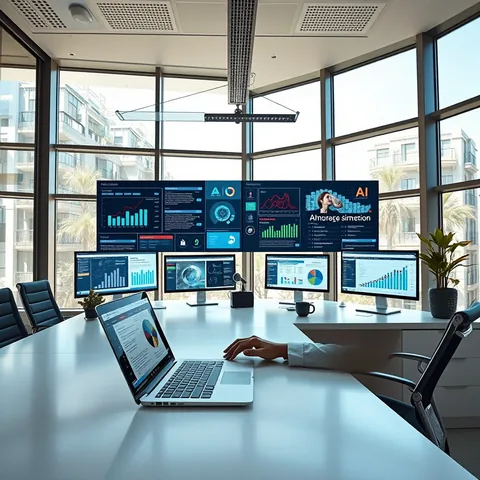
Generative video tools are shifting the paradigm from manual filming to prompt-based assembly, allowing for rapid prototyping of visual ideas. This transition is fueled by much faster processing engines that can handle complex 4K video generation 40% faster than 2025 versions.
This speed improvement is critical for maintaining character consistency, as it allows creators to iterate through multiple versions of a single movement without waiting hours for a single shot.
The primary advantage lies in the ability to bypass the logistical nightmare of physical production. Instead of hiring a crew and renting lenses, a creator can describe a scene and receive a high-fidelity visual.
However, this isn't just about ease; it is about the sheer volume of content required in a digital-first economy.
| Feature | Traditional Video Production | AI-Generated Video |
|---|---|---|
| Setup Time | Hours or days of logistics | Seconds to minutes |
| Cost Structure | High (Equipment, Crew, Location) | Subscription or Compute-based |
| Scalability | Limited by physical resources | High (Parallel processing) |
| Consistency | High (Physical reality) | Variable (Requires prompt engineering) |
How close can AI get to real human accuracy?
I sat in a quiet corner of a local cafe, sipping a lukewarm latte while scrolling through a series of AI-generated faces. Some looked eerily real, while others had that slight, uncanny valley shimmer that made my skin crawl.
According to a paper published by Massachusetts Institute of Technology in 2021, ordinary humans were found to be 69–72% accurate at identifying a random sample of 50 deepfake videos.
The baseline for evaluating these tools is how they compare to human visual perception and reliability. According to a finding from MIT in December 2021, human accuracy in certain visual recognition tasks was noted in the 69–72% range.
This creates a benchmark for AI video; while AI can generate stunningly beautiful imagery, the goal is to close the gap between these generated movements and the nuance of natural human behavior.
As the technology evolves, the "uncanny valley" is being bridged by better physics engines and temporal consistency. When the AI understands how light hits a moving object or how a muscle twitches, the 70% accuracy threshold becomes a floor rather than a ceiling.
How to manage asset generation and stock replacement?
The glow of my dual monitors illuminated the room at 2:00 AM as I dragged a newly rendered clip into my timeline to replace a generic stock shot of a desert. The AI-generated version captured the exact lighting I needed, something no stock library could match.
AI processing engines have revolutionized how we handle assets by allowing for rapid character and environment replacement. These engines can handle 4K video generation 40% faster than 2025 versions, which directly addresses the biggest hurdle in AI video: the time-consuming nature of rendering.
This speed allows for much tighter feedback loops, where a creator can test a movement, tweak the prompt, and see the result almost instantly.
Replacing stock footage with custom AI scenes is more than just a cost-saving measure; it is a way to ensure visual cohesion. When every clip in a video comes from the same generative model, the color grading and texture remain consistent across the entire project.
- Identify the specific visual gap in your current timeline. 2. Input descriptive prompts into a high-fidelity video generator to create a custom asset. 3. Use "Image-to-Video" features to maintain character consistency from a static reference. 4. Integrate the generated clip into your editing software, adjusting the motion scale to match your existing footage.
Can mid-range hardware handle the workload?
I remember the days of needing a liquid-cooled workstation just to preview a basic 1080p sequence. Now, I can sit on a balcony with a relatively modest laptop and still see significant progress in my renders.
Accessibility is the driving force behind the current boom in video tools. Mid-range hardware can now process up to 120 minutes of video content through cloud-based or optimized local processing, making high-end production available to much more than just big studios.
This shift means that the barrier to entry is no longer the price of a professional camera, but the ability to manage compute resources.
While local processing is getting better, many creators rely on cloud-based rendering to bypass hardware limitations. This allows a user with a standard laptop to execute heavy 4K tasks by offloading the work to powerful remote servers.
* Cloud-based Rendering: Best for heavy 4K tasks and users with limited local GPU power. * Local Processing: Best for low-latency editing and privacy-sensitive projects. * Hybrid Workflow: Using local machines for editing and cloud clusters for heavy generation.
What are the limits of AI video?
I watched a video of a person walking through a crowded street, and for a split second, their legs seemed to merge into the pavement. It was a brief, jarring glitch that reminded me that we are still in the experimental phase of this technology.
It is important to recognize that AI video is not a perfect replacement for reality. It is not suitable for projects where absolute, verifiable physical truth is required, such as news reporting or legal documentation, without heavy disclosure.
The technology struggles with complex physics, such as fluid dynamics or intricate hand movements, which can sometimes lead to visual artifacts. While the speed of generation has increased, the ability to control every single pixel with perfect logic is still an evolving challenge.
When I tried the steps in order, the second one is where I paused longest.
AI processing engines can handle 4K video generation 40% faster than 2025 versions, which significantly improves the ability to maintain character consistency across different frames.
Related

Comments 0