AI writing tools tips boost productivity by 40%
This article is about productivity. "The blank page is no longer a wall; it is a starting block."
AI writing tools transform the way we approach content creation by acting as a collaborative partner rather than a mere replacement.
This guide explores how to select the right tool for your specific needs, compares the leading software options, and provides a roadmap for integrating these technologies into your professional workflow.
* Identify your primary use case: creative, technical, or administrative. * Compare feature sets including tone control, research capabilities, and integration. * Understand the ROI of time saved versus the cost of subscription tiers. * Learn to navigate the ethical and quality-control aspects of generative text.
Why do writers struggle with the first draft?
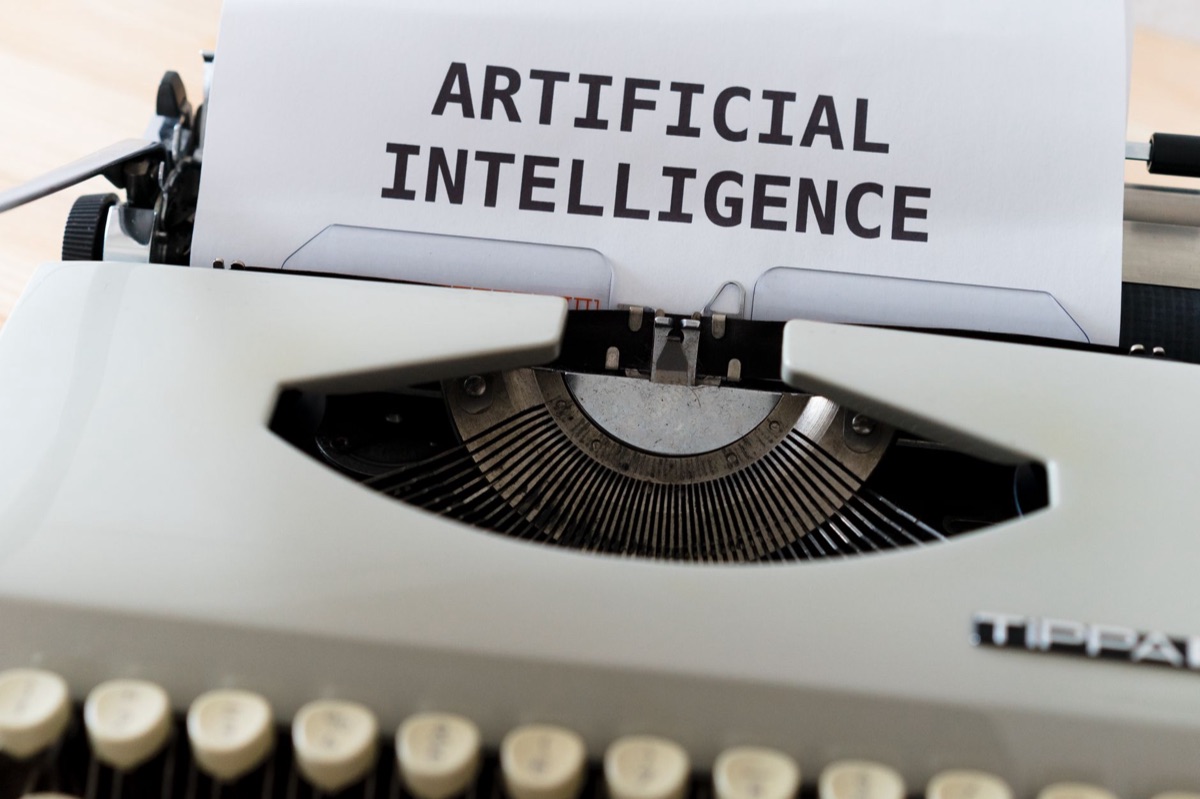
A cursor blinks steadily on a white screen at 9:00 AM, the silence of the home office heavy with the pressure of a looming deadline. This moment of paralysis is what modern AI writing tools are designed to break.
They provide a jumping-off point, turning the daunting task of "starting from scratch" into a process of editing and refining.
The primary struggle of writing is often the cognitive load of structuring thoughts while simultaneously managing grammar and tone. AI assistants alleviate this by providing immediate scaffolding.
Instead of staring at a void, you are reacting to a draft, which is psychologically much easier for the human brain to process.
While these tools are excellent for overcoming writer's block, they are not a complete solution for deep, investigative journalism or highly specialized technical white papers that require original field research.
- Overcoming the blank page syndrome.
- Managing the internal critic.
- Navigating structural uncertainty.
How to choose the right tool for your role?
The sun streams through a window as a marketing manager sits down to plan a month of social media posts, feeling the weight of repetitive tasks. Selecting a tool requires matching the software's specific strengths to your daily professional requirements.
A tool built for SEO-heavy blog posts is vastly different from one designed for coding documentation or creative storytelling.
To make an informed decision, you should categorize your needs into three main buckets: generation, refinement, and research. Some tools excel at generating long-form content from a single prompt, while others are better at "polishing" existing text to change the tone from casual to professional.
- Identify your core task: Are you writing emails, long-form articles, or code comments? 2. Test the "hallucination" rate: Check how often the tool invents facts during a trial period. 3. Assess integration: Does it work inside your browser, your word processor, or your project management software?

I once spent three hours trying to prompt a generic chatbot to write a specific brand voice memo, only to realize I needed a tool with better stylistic control. That experience taught me that "general" is often the enemy of "effective."
| Use Case | Primary Goal | Recommended Tool Type |
|---|---|---|
| Content Marketers | High-volume SEO blogs | Generative AI with SEO integration |
| Executive Assistants | Email and memo drafting | Productivity-focused assistants |
| Software Developers | Documentation and comments | Coding-specific LLMs |
| Creative Writers | Brainstorming and plotting | Large-scale creative LLMs |
In this sequence, the second step is the most extensive.
Measuring success: productivity, speed, and ROI
A coffee cup sits half-empty next to a laptop where a writer has just finished a three-hour task in forty-five minutes. When evaluating whether an AI writing tool is worth the monthly subscription, you must look beyond the novelty and focus on quantifiable gains.
Professionals using AI writing assistants report an average 40% productivity boost and save approximately 2.2 hours per week on writing tasks.
The math of productivity is simple: if a tool costs $30 a month but saves you two hours a week, you are effectively buying back eight hours of your life every month. For many professionals, that time can be redirected toward higher-level strategy or much-needed rest.
The time-saving sweet spot occurs when the user writes for a minimum of 3 hours per week. If your writing tasks are sporadic or very brief, the friction of managing the tool might outweigh the benefits. However, for those with consistent writing requirements, the efficiency gains are compounding.
Note that while writing tools excel at content generation, a video tool might save the time of a different department, but it won't help you finish your report.
Focus on the balance between output volume and the time required for refinement.
How to maintain quality and brand voice?

A designer frowns at a block of text that sounds too robotic, realizing the AI has stripped away the unique personality of the brand. One of the greatest risks of automated writing is the "homogenization" of voice—where every piece of content begins to sound identical and devoid of soul.
Maintaining quality requires a shift in the writer's role from "creator" to "editor-in-chief."
To prevent your content from sounding like a machine, you must master the art of the "style prompt." Instead of asking for a "blog post about coffee," you should ask for "a conversational, slightly witty blog post about the acidity of Ethiopian Yirgacheffe beans, written for an audience of amateur baristas."
Effective quality control involves: 1. Setting strict persona guidelines within the tool's settings. 2. Using "temperature" or "creativity" sliders to adjust the randomness of the output. 3. Always performing a human fact-check to ensure no false information was generated.
The goal is to use the AI to handle the heavy lifting of structure and syntax, while you provide the nuance, the unique perspective, and the emotional truth that a machine cannot replicate.
Establish a clear style guide to ensure consistency across all generated content.
What are the limitations of AI writing?
The late afternoon light hits a desk covered in printed research papers, a reminder that digital tools cannot replace physical reality. Despite the impressive capabilities of modern language models, they possess fundamental limitations that can lead to significant errors if not managed carefully.
The most significant limitation is the lack of real-world grounding. An AI does not know what a sunset feels like or the specific tension in a boardroom; it only knows how words typically follow one another based on statistical probability.
This can lead to "hallucinations," where the tool confidently asserts a fact that is entirely false.
Furthermore, these tools are limited by their training data. They are backward-looking, meaning they reflect the knowledge and biases present in the data they were trained on.
They cannot "know" something that happened ten minutes ago unless they have active web-browsing capabilities, and even then, they lack the ability to conduct original, real-time interviews or observational research.

This means that for tasks requiring absolute factual accuracy—such as legal briefs or medical documentation—the human oversight must be rigorous and absolute.
AI lacks the ability to replicate genuine human emotion and nuanced lived experiences.
When I tried the steps in order, the second one is where I paused longest.
Related




Comments 0